Retail & eCommerce
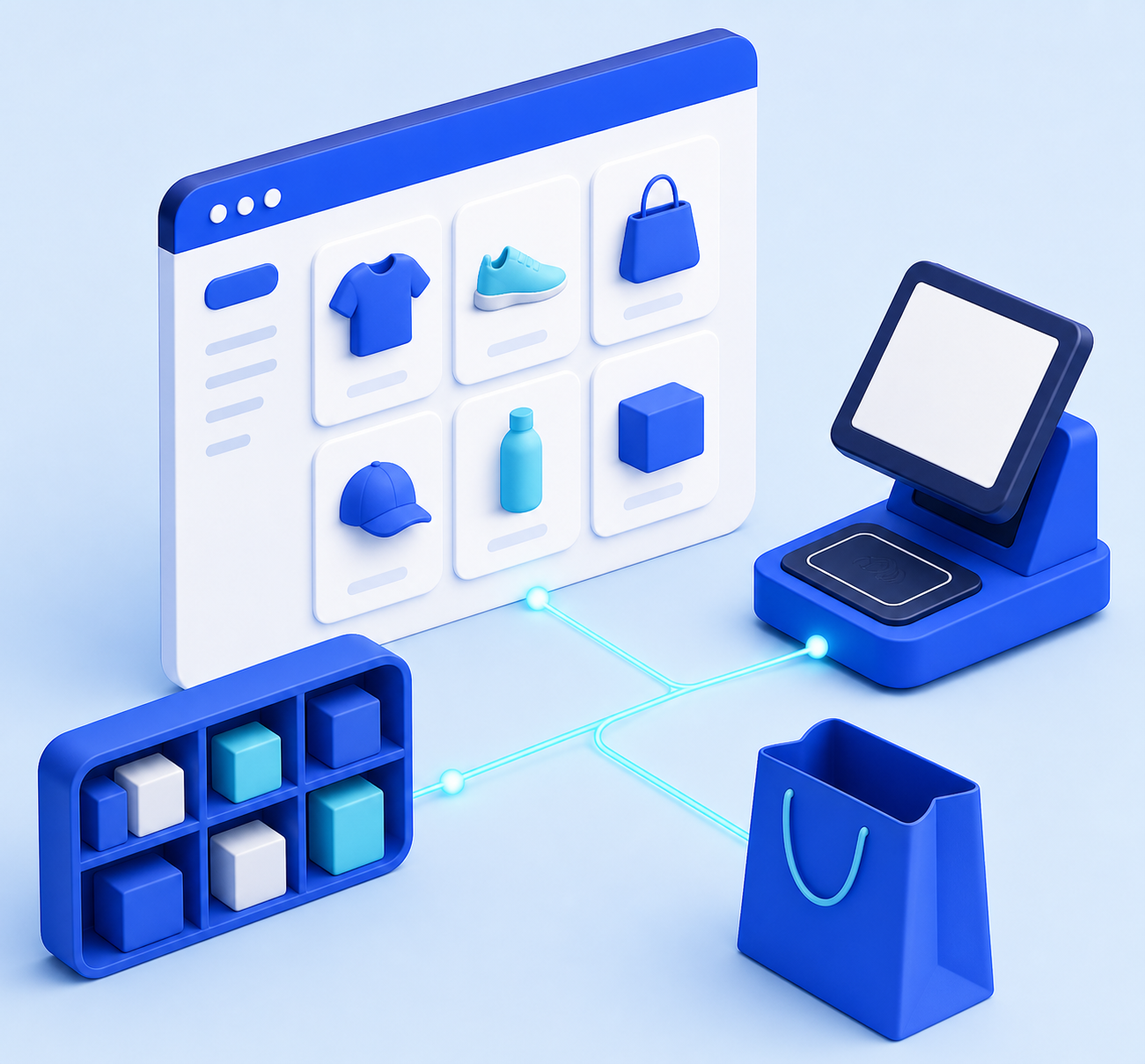
Retail is no longer online or in-store — it is both, and customers expect them to behave like one business. KIVOZA connects you with verified IT experts who can build the store, stock, and customer systems that make that actually work.
What Technology Means for Retail
Customers move between channels without thinking about it. They check stock online, buy on a phone, collect in store, and return by post — and they expect the price, the availability, and their order history to be the same in every one of those places.
Making that true is mostly an inventory and data problem. One stock figure has to serve the website, the till, and the marketplaces, and one customer record has to cover both the in-store purchase and the online return. Where those diverge, you get oversells, refunds, and complaints.
The upside is significant. Retailers who get this right can offer click and collect, ship from store, and endless aisle — using stock they already own — and can market to customers based on what they actually buy rather than what they once browsed.
What the right technology delivers
IT Services Retailers Need
Whatever your store or retail group needs, here are the IT services retailers ask for most — all available through verified vendors on KIVOZA.
Online Stores
Fast, high-converting e-commerce built for your catalogue and your customers.
POS & In-Store Systems
Till systems connected to the same stock and customer data as the website.
Inventory Management
One accurate stock position across every location and sales channel.
Retail Mobile Apps
Shopping, loyalty, and in-store tools on the devices customers and staff use.
Marketplace Integration
Listings, stock, and orders synced with the marketplaces you sell on.
System Integrations
Connecting store, ERP, accounting, and fulfilment so data stops being re-keyed.
Loyalty & Customer CRM
Programmes and campaigns built on complete cross-channel purchase history.
Retail Marketing & SEO
Product and category visibility plus paid campaigns that pay for themselves.
Retail Analytics
Margin, sell-through, and basket reporting across products and locations.
Solutions & Platforms Commonly Used
Here's the kind of thing that actually gets built for retail businesses, grouped by area. The right mix depends on your channels and catalogue.
Common Challenges Retailers Face
If any of these sound familiar, you're not alone — they're the reasons most retailers look for an IT partner.
Who It's For
From single shops to multi-channel groups, here's who benefits most — and what they're usually solving for.
Independent retailers
Shops moving online properly rather than treating e-commerce as a side project.
Multi-store chains
Groups needing consistent stock, pricing, and reporting across locations.
Online-only brands
Pure e-commerce businesses scaling past what an off-the-shelf setup handles.
Marketplace sellers
Businesses selling across several platforms and drowning in manual listing work.
Wholesale & B2B retailers
Suppliers needing trade pricing, account ordering, and credit terms online.
Specialist & niche retailers
Retailers with complex products that need proper configuration and guidance.
How KIVOZA Helps Retailers
Retail integrations are where most projects go wrong — stock, POS, and channels all have to agree. Instead of gambling on a random developer, KIVOZA connects you with checked, real IT businesses, and lets them come to you — so you can find ones with the right retail and e-commerce experience.
Ready to run online and in-store as one business?
Post your project and get matched with verified IT experts — then choose who to work with. It only takes a few minutes.
Every vendor is checked to be a real, registered business before appearing.