Cloud, DevOps & Infrastructure
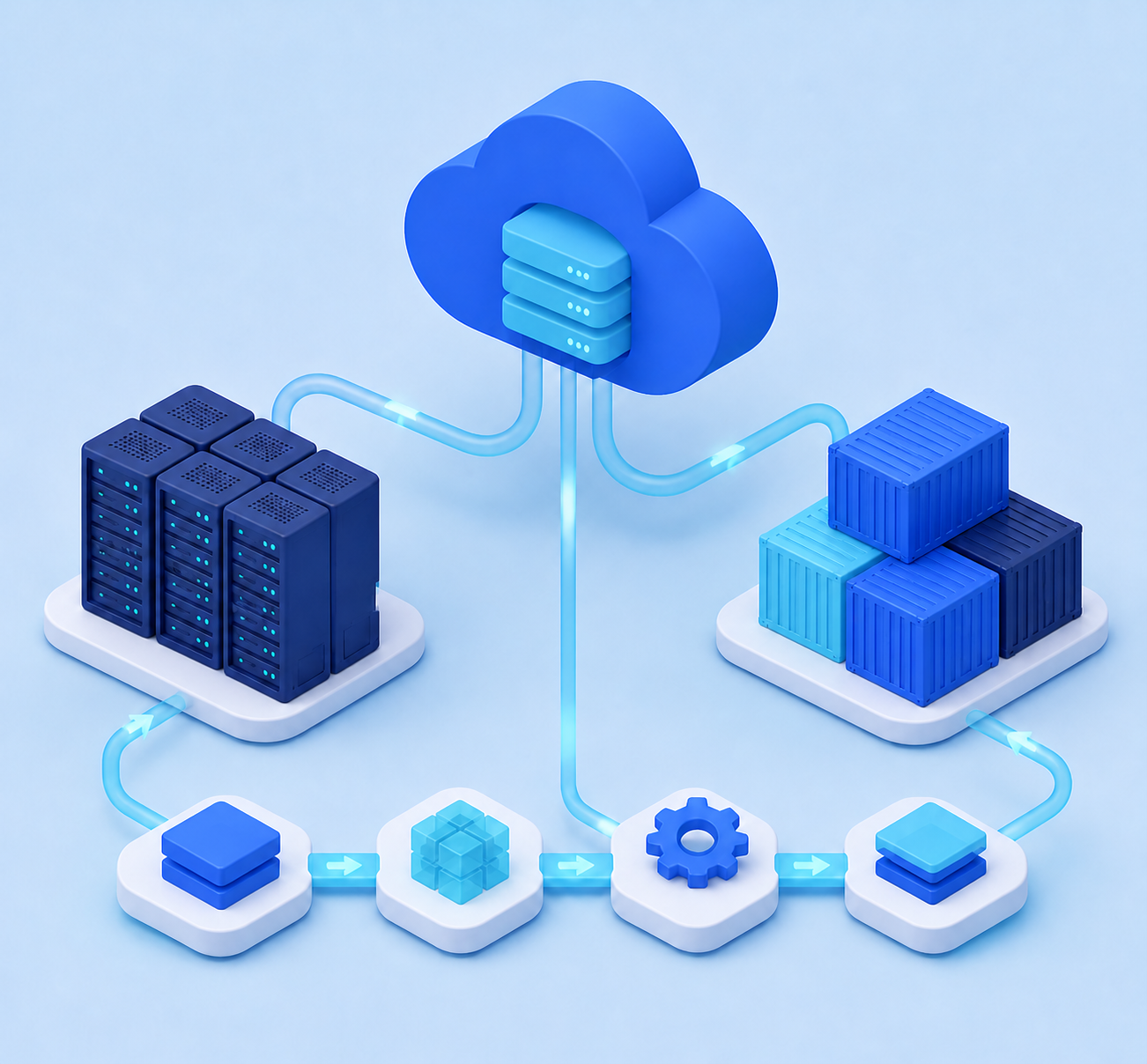
Everything you sell online sits on infrastructure someone has to design, run, and keep upright. Cloud and DevOps work makes that layer fast, resilient, and predictable — so releases go out smoothly and your systems stay up when it matters.
What are Cloud, DevOps & Infrastructure Services?
Cloud services cover where your systems actually run — the servers, storage, databases, and networking behind your website, app, or internal tools, usually hosted with providers like AWS, Azure, or Google Cloud instead of hardware in your office.
DevOps is the practice that connects development and operations: automated pipelines that test and release code, infrastructure defined in version-controlled files, and monitoring that catches problems before customers notice. is the practice that connects development and operations: automated pipelines that test and release code, infrastructure defined in version-controlled files, and monitoring that catches problems before customers notice. Infrastructure work covers the design, security, scaling, and day-to-day running of it all.
The outcome is less drama. Deployments become routine rather than nerve-wracking, systems scale up for busy periods and back down afterwards, failures are caught early, and your team spends its time building instead of firefighting.
What good infrastructure gives you
Types of Cloud & DevOps Services
"Cloud and DevOps" spans setup, automation, and ongoing operations. Here are the projects businesses most often need.
Cloud Migration
Moving existing systems and data to the cloud with minimal disruption.
Cloud Architecture & Setup
Designing an environment that's secure, resilient, and sized correctly from day one.
CI/CD Pipelines & Automation
Automated build, test, and deploy pipelines that make releases routine.
Containers & Kubernetes
Packaging applications so they run identically everywhere and scale cleanly.
Infrastructure as Code
Environments defined in code, so they're repeatable, reviewable, and rebuildable.
Monitoring & Observability
Dashboards, logs, and alerts that surface problems before your customers do.
Server Management & Hosting
Ongoing management, patching, and tuning of the servers your systems run on.
Backup & Disaster Recovery
Tested backups and a documented plan for getting back up quickly.
Cloud Cost Optimisation
Reviewing usage and architecture to cut waste without hurting performance.
Tools & Technologies Used
You don't need to know these — but here's the toolkit skilled cloud and DevOps vendors work with. The right stack depends on your setup.
Common Challenges Businesses Face
If any of these sound familiar, you're not alone — they're the reasons most businesses look for a cloud partner.
Who Needs It & Why
Almost any business running systems online benefits — but here's who needs it most, and what they're usually solving for.
Businesses moving to the cloud
Companies leaving on-premise or shared hosting and wanting the move done properly.
SaaS products scaling up
Platforms growing past the setup that got them started.
Teams deploying by hand
Development teams losing days to manual, error-prone release processes.
E-commerce with peak seasons
Stores that must stay fast through sales, launches, and holiday traffic.
Companies with rising cloud costs
Businesses paying more each month and unsure what's driving it.
Organisations needing resilience
Firms where downtime or data loss carries real financial or compliance consequences.
How KIVOZA Helps You Get It Set Up
Infrastructure decisions are hard to reverse and expensive to get wrong — and it's difficult to assess technical skill from the outside. Instead of guessing, KIVOZA connects you with checked, real cloud and DevOps businesses, and lets them come to you.
Ready for infrastructure that just stays up?
Post your project and get matched with verified cloud, DevOps and infrastructure experts — then choose who to work with. It only takes a few minutes.
Every vendor is checked to be a real, registered business before appearing.